
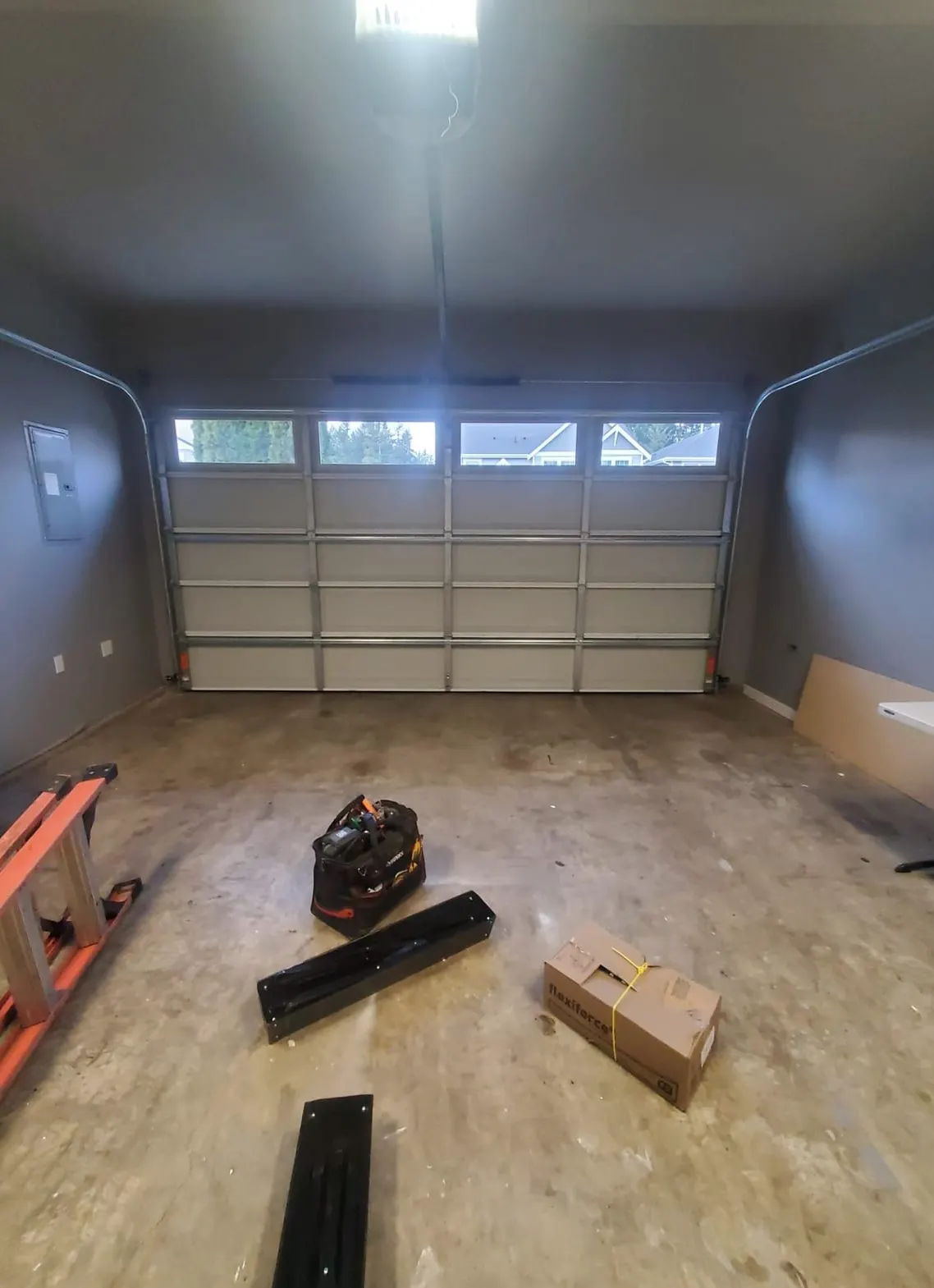
What We See on a Typical Call Like This
After a hurricane-season storm knocks out power on this side of Baker County, the calls follow a pattern. Someone yanked the emergency release cord mid-panic, then forced the door up by hand and it jumped the track. Or the power came back, the opener started grinding, and now the door won't go up or down at all. A lot of these calls didn't need to happen — the door itself was fine. The problem was how it got handled during and after the outage.
Here's how to do it without creating a second problem on top of the first one.
Tools You'll Need
- A step stool or ladder (the release cord is usually out of easy reach)
- A flashlight or headlamp, since this is often happening in the dark
- Work gloves (the door is heavier than it looks once it's disconnected from the opener)
- A rag to wipe down the track if it's been collecting moisture, which is common with the humidity here
Opening the Door Manually During an Outage
- Make sure the door is fully closed first. If it's already open and the opener loses power mid-cycle, don't pull the release cord yet — the door could drop suddenly. Support it or wait until it's safely down.
- Find the emergency release cord. It's the red handle hanging from a track that runs along the ceiling, usually near the center of the door.
- Pull the cord straight down firmly. You'll hear a click. This disconnects the trolley from the opener's drive mechanism, so the door is now running on its springs alone.
- Lift the door slowly, using both hands, lifting from the center. A properly balanced door should feel light and move smoothly. If it feels heavy, jerky, or starts to fall on its own, stop. That's a spring or cable problem, not a power problem, and forcing it can hurt you or wreck the hardware.
- Prop the door open if you need it to stay up, especially if there's wind. A gust can slam an unsupported door down fast.
Closing the Door Manually
- Lower the door slowly with both hands, keeping it centered so it doesn't bind in the tracks.
- Make sure it seats flush against the floor. With afternoon downpours common this time of year, a door that doesn't close all the way can let water and wind-driven rain into the garage.
- If you have a manual lock or slide bolt, engage it, particularly if the outage is storm-related and security is a concern.
Re-Engaging the Opener Once Power Is Back
- Close the door fully by hand first. Trying to reconnect while the door is partway up is how trolleys get bent.
- Pull the emergency release cord toward the door (not down) at roughly a 45-degree angle. This re-engages the trolley with the opener's carriage.
- Test it with the remote or wall button. The door should run through a normal open-close cycle without hesitation, grinding, or stopping partway.
- Listen and watch closely on that first cycle. Grinding, a door that reverses unexpectedly, or one that stalls partway up usually means the trolley didn't catch correctly or something shifted while it was running manually.
- Check the safety sensors near the floor on each side of the track. If the door won't close at all and just blinks the opener light, the sensors may be misaligned or something's blocking the beam — common after someone's been in and out of the garage with flashlights and gear during the outage.
What's a Homeowner Job, and What Isn't
Manually opening and closing the door, reconnecting the release cord, and checking the sensor alignment are all things you can safely handle yourself. What you shouldn't attempt: adjusting or replacing springs, straightening a bent track, forcing a door that feels heavy or uneven, or diagnosing an opener that runs the motor but the door doesn't move. Springs are under serious tension, and a track that's slightly out of alignment from humidity-related swelling in the door or frame can make a manual lift unpredictable. That's where a call becomes the right move instead of a judgment call.
When to Call Macclenny Garage Door Experts
If the door felt unusually heavy during a manual lift, if it won't stay up on its own, or if the opener is grinding or reversing after you've reconnected it, those are signs of a spring, cable, or track issue rather than a simple power hiccup. We handle Garage Door Cable Repair and Off Track Door Repair for homes throughout Macclenny, Glen St. Mary, Sanderson, and the rest of Baker County, and we'll check the balance and hardware while we're there so the next outage doesn't turn into a bigger repair.
If your door gave you trouble during the last outage, give Macclenny Garage Door Experts a call before the next storm rolls through — we'll have it running right again.