
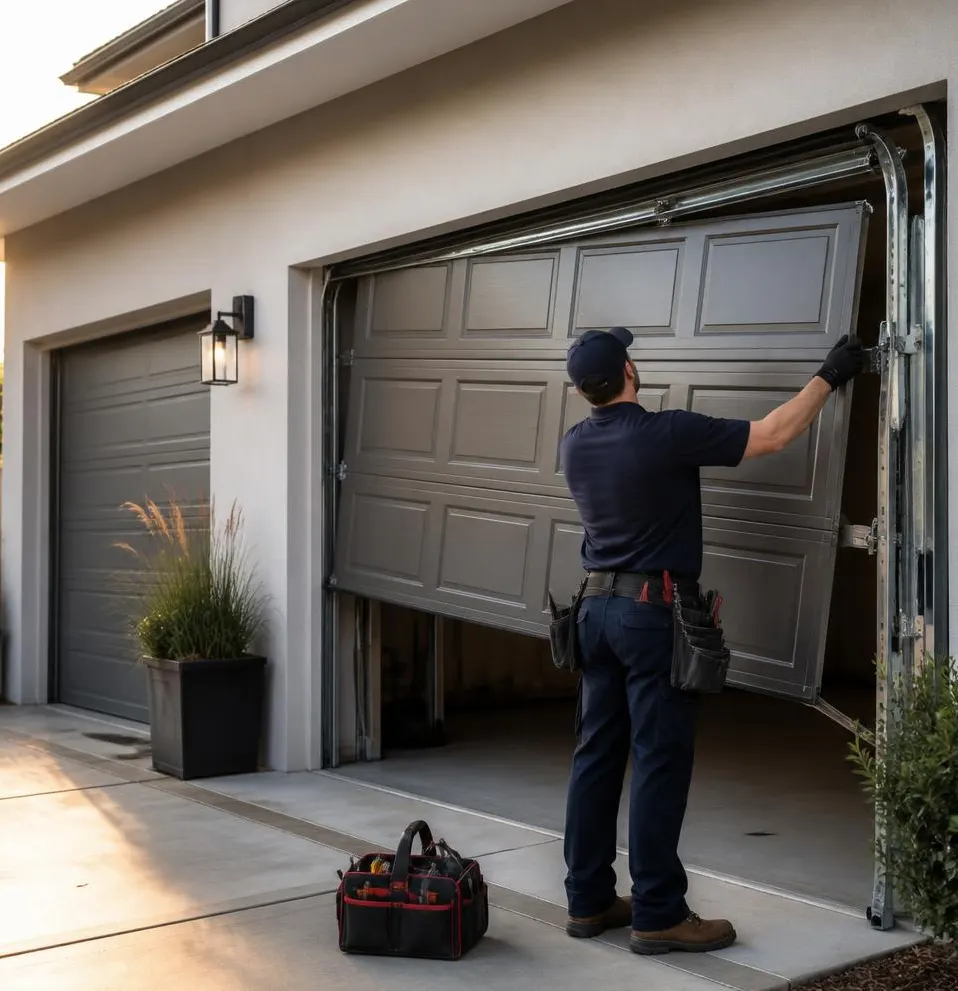
A typical call starts the same way: a homeowner notices rust creeping up the bottom panel, the wood trim around the opening has started to swell from months of humidity, or last season's storms left a door that just doesn't sit right on the track anymore. The door still limps along, but it's clear patching it again isn't the long-term answer. The next question is almost always, "So what does a new one actually cost?"
The honest answer is: it depends on more than most people expect. Here's a breakdown of the ranges and the factors behind them, so you can budget with your eyes open before you start shopping.
What Drives the Price of a New Garage Door
Garage door pricing isn't just about the panel you see from the driveway. Several things combine to set the final installed cost:
- Material — steel, wood, composite/faux wood, or aluminum, each with its own price point and upkeep needs
- Construction — single-layer vs. insulated double- or triple-layer panels
- Size — single-car openings cost less than double-wide ones
- Style — flat panel, raised panel, or carriage-house detailing
- Windows and hardware — glass inserts, decorative hinges, and handles are add-ons, not included in base pricing
- Wind rating — doors built or reinforced to meet wind-load requirements cost more than standard residential doors
- Labor and removal — hauling away the old door, adjusting track or framing, and new weatherseal are usually separate line items
Cost Ranges by Door Type
These are national ranges for materials and installation together. Always treat them as a starting point for comparison, not a quote — get an in-person estimate for your exact opening and goals.
- Basic single-layer steel: roughly $700–$1,200 installed. Functional and affordable, but offers little insulation and can dent easily.
- Insulated steel (double- or triple-layer): roughly $1,200–$2,500 installed. A good middle-ground choice for comfort and durability in a hot, humid climate.
- Composite or faux-wood carriage style: roughly $2,000–$4,000 installed. Gives you the carriage-house look without the maintenance real wood demands.
- Custom wood carriage doors: roughly $3,500–$10,000+ installed, depending on wood species and detailing. Beautiful, but wood needs regular sealing and refinishing to hold up against swings in humidity.
Within any of these categories, going from a single-car to a double-car opening typically adds a meaningful chunk to both material and labor costs, simply because there's more door to build and more structure to support it.
Wind-Load and Storm Season Considerations
Because this area sits in hurricane territory, wind-load performance is worth factoring into your decision, not just your style preference. Doors built or reinforced to meet wind-load standards — heavier gauge steel, reinforced struts, stronger track and hardware — generally add somewhere in the range of a few hundred dollars over a standard residential door, depending on size and reinforcement level. It's a reasonable trade-off: a door that can't handle wind pressure during a bad storm risks buckling, which can compromise the whole garage structure, not just the door itself.
If you're near the coast or get a lot of salt air, ask about coatings or hardware finishes designed to resist corrosion. Standard steel hardware can start showing rust faster in salty, humid air, and swapping to better-protected components upfront is cheaper than replacing hinges and rollers a few years in.
Insulation Isn't Just a Northern-Climate Feature
It's easy to assume insulated doors are only worth it where winters are brutal, but in a hot, humid climate insulation helps keep garage temperatures (and whatever's stored in there) more stable, and it adds rigidity that helps the door resist warping from afternoon heat and moisture swings. If your garage is attached to living space or you use it as a workshop, the upgrade from single-layer to insulated steel is usually worth the difference.
Extras That Add to the Final Bill
- Opener installation or replacement: commonly $300–$700 separately if your current opener isn't being reused or isn't compatible with the new door's weight and style.
- Decorative windows: add cost per section, and in storm-prone areas you'll want to ask whether they're impact-rated.
- New track, springs, or cables: if your current hardware is worn, reusing it on a new door isn't always advisable — mismatched tension can shorten the life of everything.
- Trim or framing repair: swollen or rotted wood framing around the opening sometimes needs attention before the new door goes in cleanly.
Questions Worth Asking Before You Buy
- Is this door rated for the wind-load conditions in this area, or is it a standard build?
- What's the warranty on the panel finish versus the hardware?
- Does the quoted price include haul-away of the old door and full weatherseal replacement?
- Will my current opener work with this door's weight, or do I need a new one?
When to Call Macclenny Garage Door Experts
If your door is rusted, sagging, no longer sealing well against wind-driven rain, or you're simply ready for an upgrade that can handle storm season with confidence, that's exactly the kind of call we handle every week. We'll walk your opening, talk through Garage Door Installation & Replacement options that fit your home and budget, and if your opener needs attention too, we can handle Garage Door Opener Installation in the same visit so everything works together from day one.
Give Macclenny Garage Door Experts a call to get a straight answer on what a new door will cost for your home in Macclenny, FL — no guesswork, no pressure, just a clear plan.